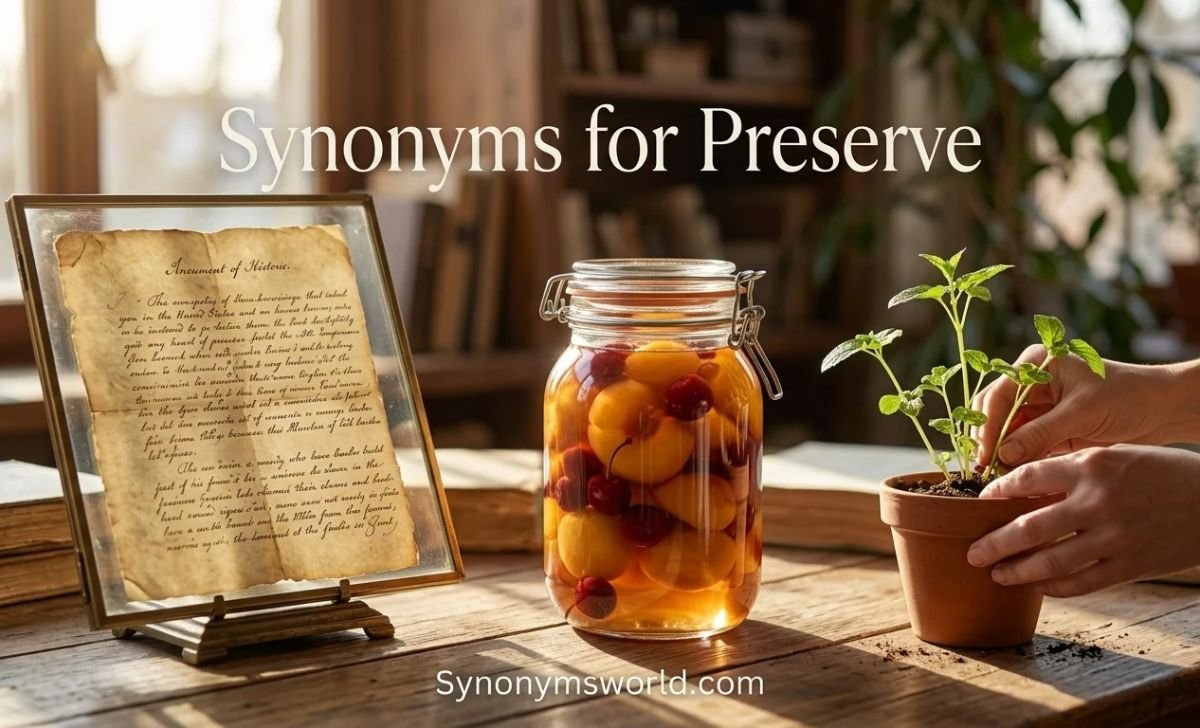
The word preserve can mean different things in everyday life. You might preserve a family photograph, protect a forest, keep a memory alive, or preserve food for later.
Each situation calls for a slightly different word. For example, conserve often relates to natural resources, while retain means keeping something rather than losing it.
Choosing the right alternative makes your writing clearer and more precise.
This guide explains 50 synonyms and related alternatives for preserve, with simple meanings and real-life examples.
You will also learn which words fit essays, historical records, food, and life, along with useful antonyms and answers to common questions.
Quick Answer
The best synonyms for preserve include protect, conserve, maintain, safeguard, retain, save, sustain, and keep.
The right word depends on your meaning:
- Protect: prevent harm or damage.
- Conserve: avoid wasting resources or protect them for the future.
- Maintain: keep something in good condition.
- Retain: continue to have or keep something.
- Safeguard: protect something important from danger.
- Sustain: keep something going over time.
- Store: keep something for future use.
- Perpetuate: cause something to continue, often a tradition or idea.
For food, words such as freeze, pickle, and dry describe specific preservation methods. They are related alternatives rather than exact replacements in every sentence.
What Does Preserve Mean?
Preserve is a verb that means to protect something from harm, damage, loss, or decay, or to keep it in its existing condition.
For example, a museum preserves old paintings by protecting them from light, moisture, and damage. A family might preserve its history by keeping photographs and letters. Someone may also preserve their health by following safe habits.
The word has several common uses:
- Protect something: preserve wildlife and natural habitats.
- Maintain a condition: preserve the quality of a product.
- Keep something available: preserve historical records.
- Prevent food spoilage: preserve fruit in jars.
- Keep something alive over time: preserve a family tradition.
Understanding the intended meaning helps you choose a synonym that fits naturally.
50 Synonyms for Preserve
1. Protect
Protect means to keep someone or something safe from harm, damage, or danger. It is one of the closest alternatives to preserve when safety is the main concern.
- The new fence helps protect the garden from animals.
- The law aims to protect endangered wildlife.
2. Conserve
Conserve means to use something carefully or protect it from loss, especially natural resources, energy, and historical objects.
- We should conserve water during the dry season.
- The museum works to conserve its collection of ancient coins.
3. Maintain
Maintain means to keep something in good condition or at the same level.
- Regular cleaning helps maintain the building.
- The team works hard to maintain high safety standards.
4. Safeguard
Safeguard means to protect something valuable or important from possible harm or loss.
- Strong passwords help safeguard personal information.
- The agreement includes rules to safeguard workers’ rights.
5. Save
Save means to prevent something from being lost, damaged, wasted, or destroyed.
- The firefighters worked to save the historic library.
- Turning off unused lights helps save energy.
6. Retain
Retain means to continue to have or keep something instead of losing or giving it away.
- The company must retain financial records for the required period.
- This fabric helps retain heat during cold weather.
7. Keep
Keep means to continue having, holding, or maintaining something.
- Please keep these letters in a dry place.
- The family decided to keep the old dining table.
8. Sustain
Sustain means to keep something going or help it continue over time.
- The community needs enough funding to sustain the project.
- Healthy soil helps sustain plant growth.
9. Uphold
Uphold means to support or maintain a rule, principle, decision, or standard.
- The judge upheld the original decision.
- Good leaders uphold the values they promise to follow.
10. Defend
Defend means to protect someone or something against an attack, threat, or criticism.
- Local groups joined together to defend the forest.
- The lawyer worked to defend her client’s rights.
11. Shield
Shield means to protect someone or something from a harmful effect.
- Thick curtains shield the furniture from direct sunlight.
- The helmet helps shield the cyclist’s head from injury.
12. Guard
Guard means to watch over something or prevent it from being harmed, stolen, or lost.
- Security staff guard the entrance to the archive.
- She kept the documents in a safe place to guard against damage.
13. Secure
Secure means to make something safe or ensure that it remains protected.
- The staff secured the old records in a locked room.
- The family secured the windows before the storm arrived.
14. Perpetuate
Perpetuate means to cause something to continue for a long time. It often describes traditions, beliefs, customs, or practices.
- The annual festival helps perpetuate local traditions.
- Schools should avoid perpetuating harmful stereotypes.
15. Store
Store means to keep something in a suitable place for future use.
- Store the medicine according to the label instructions.
- The farmers store grain in dry containers after harvest.
16. Archive
Archive means to store documents, records, photographs, or digital files for future reference.
- The library archives old newspapers for researchers.
- We archived the emails so the team could find them later.
17. Cherish
Cherish means to value someone or something deeply and hold it dear. It can describe keeping memories meaningful, rather than physically protecting them.
- She cherishes the photographs from her childhood.
- They cherish the time they spend together as a family.
18. Treasure
Treasure means to value something greatly because it is special or important.
- He treasures the watch his grandfather gave him.
- The community treasures its historic town square.
19. Continue
Continue means to keep doing something or allow an activity or process to go on.
- The organization will continue its work to protect local wildlife.
- She continued the family tradition of making bread every Sunday.
20. Prolong
Prolong means to make something last longer than it otherwise would.
- Proper storage can prolong the life of some household products.
- The treatment helped prolong the patient’s life.
21. Spare
Spare means to prevent someone or something from experiencing harm, loss, or an unwanted result.
- The thick walls spared the paintings from much of the storm damage.
- The rescue team worked to spare the village from further danger.
22. Rescue
Rescue means to save someone or something from danger or a harmful situation.
- Volunteers helped rescue animals after the flood.
- Quick action rescued several important documents from the burning building.
23. Shelter
Shelter means to provide protection from danger, weather, or harm.
- The cave sheltered the hikers from the heavy rain.
- The wildlife center shelters injured birds until they recover.
24. Harbor
Harbor means to provide a place of safety or refuge. It can also mean to hold a thought or feeling, so the context matters.
- The small bay harbors boats during severe weather.
- The protected wetland harbors several rare bird species.
25. Look After
Look after means to care for someone or something and help keep it safe or in good condition.
- Volunteers look after the historic garden throughout the year.
- She looks after the family photographs and keeps them away from moisture.
26. Care For
Care for means to give attention and help to someone or something that needs protection or maintenance.
- Staff care for the rescued animals until they can return to the wild.
- The gardener cares for the old trees in the park.
27. Keep Intact
Keep intact means to prevent something from breaking, separating, or losing its original form.
- The museum uses special packaging to keep the sculpture intact.
- The team tried to keep the original document intact during repairs.
28. Keep Alive
Keep alive means to help something continue to exist, especially a memory, tradition, hope, or interest.
- The family tells old stories to keep its history alive.
- The annual concert keeps the town’s musical tradition alive.
29. Keep Safe
Keep safe means to protect someone or something from harm, danger, or loss.
- The school stores student records in a secure system to keep them safe.
- Put the old photographs in protective sleeves to keep them safe.
30. Uphold Standards
Uphold standards means to maintain expected levels of quality, behavior, or performance. It is a useful phrase in professional writing.
- The laboratory follows strict procedures to uphold safety standards.
- The company reviews its work regularly to uphold quality standards.
31. Freeze
Freeze means to lower the temperature of food or another substance until it becomes frozen. Freezing can help preserve many foods by slowing spoilage.
- We freeze fresh berries to use them during winter.
- The cook froze the extra soup in small containers.
32. Refrigerate
Refrigerate means to keep food or another suitable item cold to slow spoilage.
- Refrigerate leftover rice promptly and follow food-safety guidance.
- The label says to refrigerate the sauce after opening.
33. Pickle
Pickle means to preserve food in vinegar or a salty brine, often with spices.
- Her grandmother taught her how to pickle cucumbers.
- They pickle carrots to enjoy them later in the year.
34. Can
Can, as a verb in food preservation, means to seal food in containers using a suitable process that prevents spoilage.
- The farm cans tomatoes during the summer harvest.
- They learned how to can peaches safely at home.
35. Bottle
Bottle means to put a liquid or other suitable product into bottles for storage. It may be part of a preservation process.
- The company bottles fresh juice in sealed containers.
- They bottled the homemade sauce after preparing it safely.
36. Dry
Dry means to remove moisture from something. Drying can preserve certain foods by reducing the moisture available for spoilage.
- The family dries herbs for use in winter meals.
- They dry apple slices for a convenient snack.
37. Dehydrate
Dehydrate means to remove most of the water from something, often food, to help it last longer.
- The hikers dehydrate fruit before a long trip.
- The producer uses special equipment to dehydrate vegetables.
38. Cure
- Curing* means treating food with salt or other suitable ingredients and methods to help preserve it. The exact process depends on the food.
- The butcher cures meat under controlled conditions.
- The producer cures fish using a traditional method.
39. Salt
Salt, as a verb, means to add salt to food as part of a preservation method.
- The family salts fish before storing it.
- The recipe explains how to salt vegetables for a traditional pickle.
40. Smoke
Smoke means to expose certain foods to smoke as part of a process that adds flavor and, under suitable conditions, helps preserve them.
- The producer smokes fish using a controlled process.
- They smoke meat according to a traditional family recipe.
41. Restore
Restore means to bring something back to a former or better condition. It is related to preservation when repairing something helps prevent its loss.
- Experts restored the damaged painting carefully.
- The town restored the old bridge to protect its history.
42. Rehabilitate
Rehabilitate means to repair or improve something so it can return to a useful or healthy condition.
- The project aims to rehabilitate damaged wetlands.
- Workers rehabilitated the historic building instead of demolishing it.
43. Perpetuate Traditions
Perpetuate traditions means to keep customs or practices going across generations. It is a phrase that explains a specific use of preserve.
- The festival helps perpetuate traditions passed down by local families.
- Parents share traditional songs to perpetuate their cultural heritage.
44. Maintain Quality
Maintain quality means to keep a product, service, or result at an expected standard.
- Careful packaging helps maintain the quality of the tea.
- Regular checks help maintain quality throughout production.
45. Protect Heritage
Protect heritage means to prevent damage or loss to a community’s history, culture, buildings, or traditions.
- Local volunteers work to protect the town’s heritage.
- The new rules help protect heritage buildings from careless alterations.
46. Retain Information
Retain information means to keep facts, details, or knowledge rather than forgetting or losing them.
- Taking clear notes can help students retain information.
- The archive retains information about the town’s early residents.
47. Keep in Its Original State
Keep in its original state means to prevent something from being changed or altered.
- The conservators aim to keep the artifact in its original state.
- The owner kept the old house in its original state as far as possible.
48. Maintain Continuity
Maintain continuity means to keep a process, service, or connection going without major interruption.
- The backup system helps maintain continuity during an outage.
- The new manager followed the existing plan to maintain continuity.
49. Protect Reputation
Protect reputation means to prevent damage to the good opinion people have of a person or organization.
- The company responded quickly to protect its reputation.
- Honest communication can help protect a professional reputation.
50. Prevent Decay
Prevent decay means to stop or slow the process of deterioration or rotting. The method depends on the material involved.
- Proper storage helps prevent decay in wooden furniture.
- Food must be handled and stored correctly to prevent decay and spoilage.
Another Word for Preserve in an Essay
For essays and academic writing, the best alternative depends on the subject and the sentence.
| Word | Best use | Example |
|---|---|---|
| Maintain | Keep a condition or standard | The policy helps maintain public safety. |
| Conserve | Protect resources or historic objects | The program aims to conserve natural resources. |
| Retain | Keep information or an existing feature | The revised design retains the original structure. |
| Safeguard | Protect rights, interests, or information | The law helps safeguard personal privacy. |
| Uphold | Support rules or principles | The court must uphold the law. |
| Sustain | Keep an activity or system going | The funding will sustain the research project. |
For a formal essay, avoid replacing preserve with an unfamiliar word simply to sound academic. A clear word that matches the sentence is usually the stronger choice.
Synonyms for Preserving History and Culture
Preserving history means keeping records, objects, buildings, and stories available for future generations. The best alternatives include conserve, protect, archive, retain, and perpetuate.
- Conserve: Experts conserve old manuscripts to prevent further damage.
- Protect: The town introduced rules to protect its historic buildings.
- Archive: The library archives letters and photographs for researchers.
- Retain: The renovation retained important features of the original building.
- Perpetuate: Local celebrations perpetuate customs passed down through generations.
These words describe different actions. Archiving stores records, conservation focuses on preventing deterioration, and perpetuating keeps a tradition or practice going.
Synonyms for Preserving Life
When preserve refers to life, the most natural alternatives are often save, protect, rescue, safeguard, and sustain.
- Save: The emergency team worked to save the injured climber.
- Protect: Vaccination programs can protect people against certain diseases.
- Rescue: Firefighters rescued residents from the damaged building.
- Safeguard: Safety rules help safeguard workers from avoidable risks.
- Sustain: Clean water and food sustain human life.
Save often suggests preventing death or loss. Protect focuses on reducing danger, while sustain means providing what is needed for something to continue.
What Is Another Word for Preserving Food?
Food preservation means slowing spoilage so food can be stored safely for later use. The method depends on the type of food and the equipment available.
- Freeze: Keep suitable food frozen to slow spoilage.
- Refrigerate: Keep perishable food cold when refrigeration is appropriate.
- Pickle: Use vinegar or brine in a suitable pickling process.
- Can: Seal food using a tested canning method.
- Dry or dehydrate: Remove moisture from suitable foods.
- Cure or salt: Use appropriate curing or salting methods for certain foods.
These terms describe methods rather than universal synonyms for preserve. Food safety matters: follow tested instructions for canning and curing, and do not assume that sealing food in a jar makes it safe at room temperature.
What Is Another Word for Well-Preserved?
Well-preserved usually describes something that has stayed in good condition over time. Suitable alternatives include well-maintained, intact, unspoiled, and in good condition.
- Well-maintained: The well-maintained building still has its original wooden floors.
- Intact: The archaeologists found an intact pottery vessel.
- Unspoiled: The old village has an unspoiled historic center.
- In good condition: The family kept the antique chair in good condition.
For a person, well-preserved can also describe someone who appears younger than expected for their age. The phrase is context-dependent, so the best alternative changes with the subject.
Is There a Synonym for Preserve Starting With E?
There is no common, direct synonym for preserve beginning with E that works naturally in every context. A few E-words may fit particular meanings:
- Ensure: Make certain that a condition or result continues. For example, “Regular checks help ensure the records remain accurate.” This describes making an outcome certain, not preservation itself.
- Encapsulate: Enclose something or express its main qualities in a compact form. For example, “The archive encapsulates the town’s history.” This does not mean exactly the same as preserve.
If a crossword, word game, or assignment requires a synonym beginning with E, the number of letters and the sentence context will help narrow the answer.
Antonyms of Preserve
The opposite of preserve depends on what is being preserved. For a building, it may be destroy; for a resource, waste; and for a tradition, abandon.
| Antonym | Meaning | Example |
|---|---|---|
| Destroy | Cause something to cease to exist or become unusable | The fire destroyed the old records. |
| Damage | Harm something or reduce its condition | Moisture damaged the painting. |
| Ruin | Spoil something badly | Poor storage ruined the fruit. |
| Neglect | Fail to care for something properly | The owner neglected the historic house. |
| Abandon | Give up or leave something behind | The community abandoned the old custom. |
| Waste | Use something carelessly or unnecessarily | Leaving the tap running wastes water. |
| Squander | Waste a valuable resource or opportunity | The project squandered its limited funds. |
| Endanger | Put someone or something at risk | Illegal hunting endangers rare animals. |
| Discard | Throw something away or stop keeping it | The office discarded the outdated files. |
| Degrade | Reduce quality or condition over time | Pollution can degrade the soil. |
Preserve vs. Conserve: What Is the Difference?
Preserve and conserve overlap, but they often emphasize different things.
- Preserve commonly means protecting something from damage, loss, or change.
- Conserve often means protecting something from loss or using it carefully, especially natural resources.
For example, a museum may preserve an ancient painting, while a community conserves water during a drought. Both words can be correct in some of the same situations, but conserve places more emphasis on careful use or resource protection.
FAQs
1. What is the closest synonym for preserve?
Protect is one of the closest synonyms when preserve means preventing harm. Maintain, conserve, and retain may fit better when the focus is condition, resources, or keeping something.
2. What does preserve mean in simple words?
Preserve means to keep something safe, protect it from damage, or prevent it from being lost or spoiled.
3. What is another word for preserve in an essay?
Maintain, conserve, retain, safeguard, and uphold are useful in formal writing. Pick the word that matches the meaning of your sentence.
4. What is another word for preserve history?
Conserve, protect, archive, and retain can fit different parts of preserving history. Perpetuate works especially well for keeping traditions and stories alive.
5. What is a synonym for preserve life?
Save, protect, rescue, and safeguard are common alternatives when talking about protecting life from danger.
6. What is another word for preserving food?
Depending on the method, food may be frozen, pickled, canned, dried, cured, or refrigerated. These terms describe specific preservation methods rather than exact synonyms in all contexts.
7. What is the opposite of preserve?
Common antonyms include destroy, damage, ruin, neglect, and abandon. The best choice depends on whether you mean a physical object, a resource, or a tradition.
8. What is a synonym for preserve starting with E?
There is no widely used, direct E-word synonym for preserve across all contexts. Ensure may fit sentences about keeping a result certain, but its meaning is different.
9. Is preserve the same as conserve?
Not always. Preserve often emphasizes protection from damage or change, while conserve commonly emphasizes protecting resources or using them carefully.
10. Is preserve a verb or a noun?
Preserve is most commonly used as a verb, as in “preserve the painting.” The noun preserve can refer to a protected area, such as a wildlife preserve. Preserves can also mean fruit prepared and stored in a sweet mixture.
Conclusion
The best synonym for preserve depends on what you want to keep safe or maintain.
Protect fits situations involving danger, conserve suits resources, maintain describes keeping something in good condition, and retain focuses on keeping what you already have.
Food preservation calls for more specific words such as freeze, pickle, and dry. When writing about history, traditions, or life, choose the word that explains the action most clearly.
The right alternative makes your sentence more accurate and natural.
Read More Blogs:
- 50 Ways to Say Collection: From Books to Personal Items
- 50 Other Words for Justify in Writing and Speec
- 50 Synonyms for Overwhelming: Words for Every Situation
- 50 Ways to Describe an Error Without Repeating Mistake
- 50 Synonyms for Mistake: Words for Errors, Blunders, and More